Your Cart is Empty


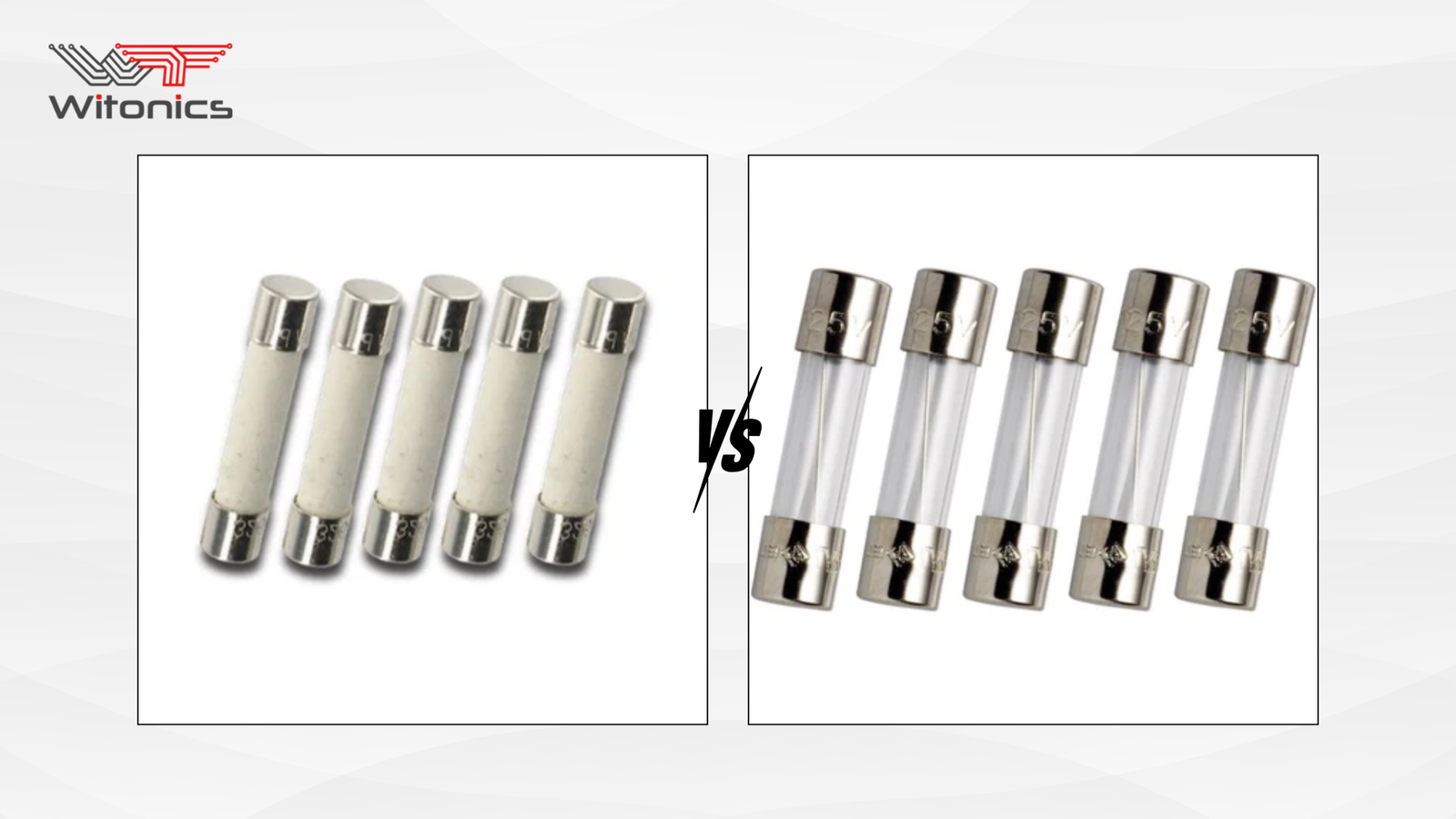

Fuses look simple, but choosing the wrong one can cause repeated failures, damaged components, or unsafe electrical conditions.
That's why many people search for the difference between glass andceramic fuses, they want a clear answer, not confusing specs.
This topic usually comes up when a fuse keeps blowing, a device stops working, or someone is building or repairing a circuit for the first time.
The challenge is that both glass and ceramic fuses may look similar in size, yet they behave very differently under fault conditions.
This blog explains the real differences between glass fuse and ceramic fuse. You'll learn how each type works, where it should be used, and what to check before selecting one.
Anelectrical fuse is a safety component designed to protect circuits from excess current. When current goes beyond a safe level, the fuse element melts and breaks the circuit.
This prevents damage to sensitive parts like power converters and other components that are not designed to handle overloads.
Fuses are rated by:
• Current (amps)
• Voltage
• Response time
Choosing the correct fuse type is just as important as choosing the correct rating.
Glass fuses are commonly used in low-power and visible-inspection applications.
They usually come asglass cartridge fuses, allowing you to see whether the internal wire has blown. This makes troubleshooting quicker in simple circuits.
• Small electronics
• Consumer devices
• Basic automotive accessories
• Circuits with low fault current
They are often used as a fast blow fuse, meaning they react quickly to sudden current spikes.
Ceramic fuses are built for higher stress environments. The body is made of ceramic material that can handle higher temperatures and fault currents.
These are commonly used where safety and reliability matter more than visual inspection.

• Industrial control panels
• High-current circuits
• Equipment using voltage fuse protection
• Circuits with surge-prone loads
Ceramic fuses are often used as a time delay fuse, allowing brief current surges without blowing immediately.
|
Feature |
Glass Fuse |
Ceramic Fuse |
|
Body material |
Glass |
Ceramic |
|
Fault current handling |
Low |
High |
|
Visual inspection |
Easy |
Not visible |
|
Heat resistance |
Limited |
Excellent |
|
Best use |
Light electronics |
Heavy-duty circuits |
Always match the amp rating exactly. For example, using a 12a 250v fuse instead of a lower-rated option can prevent nuisance blowing.
→ Fast response: fast acting fuse
→ Delayed response: time-delay designs
Some applications require a fast blow fuse, while others need a delay to handle startup surges.
Certain panels require specific standards such as class c fuse or brand-specific designs likebussmann fuse options.
Specialized setups may also reference cgl series fuses in documentation that always follow manufacturer guidance.

→A car stereo repeatedly blowing a fuse usually points to the wrong fuse speed or rating among common automotive accessories.
→Industrial power supplies often fail when glass fuses are used instead of cartridge fuses.
→Replacing a ceramic fuse with glass may work temporarily but can fail under fault conditions.
If you're comparingfuse brands or construction quality, this breakdown of material and performance differences helps when reviewing options like Bussmann versus other manufacturers.
Choose a glass fuse if:
• Fault current is low
• Visual inspection is important
• The circuit is stable and predictable
Choose a ceramic fuse if:
• Short-circuit energy is high
• Safety containment is critical
• The circuit experiences surge currents
Both fuse types are available in common sizes:
• Glass Fuses: 3.6×10mm, 5×20mm, 6×30mm
• Ceramic Fuses: 3.6×10mm, 5×20mm, 6×30mm
Always confirm physical fit along with electrical ratings.
Q: Which fuse is safer: glass or ceramic?
A: Ceramic fuses are generally safer for high-current or industrial circuits.
Q: Can I replace a ceramic fuse with a glass fuse?
A: Only if current, voltage, and fault ratings match and the application allows it.
Q: Why does my fuse blow immediately?
A: This often happens due to incorrect fuse type, rating mismatch, or short circuits.
Q: Are ceramic fuses slow-blow?
A: Many are designed as delay-type, but not all, always check specifications.
Glass and ceramic fuses may look similar, but they serve different purposes. Glass fuses work well in low-power circuits where quick response and easy visual inspection are important.
Ceramic fuses are better suited for higher fault currents and applications where heat resistance and safety matter more than visibility.
The right choice always depends on the circuit's current rating, voltage level, and how the equipment behaves during startup or overload conditions.
AtWitonics, we simplify the process by offering standard glass and ceramic fuse options with clear specifications, making it easier to match the fuse to the actual circuit requirement.
When fuse selection is based on function, circuits stay protected, components last longer, and troubleshooting becomes far less frequent.