Your Cart is Empty


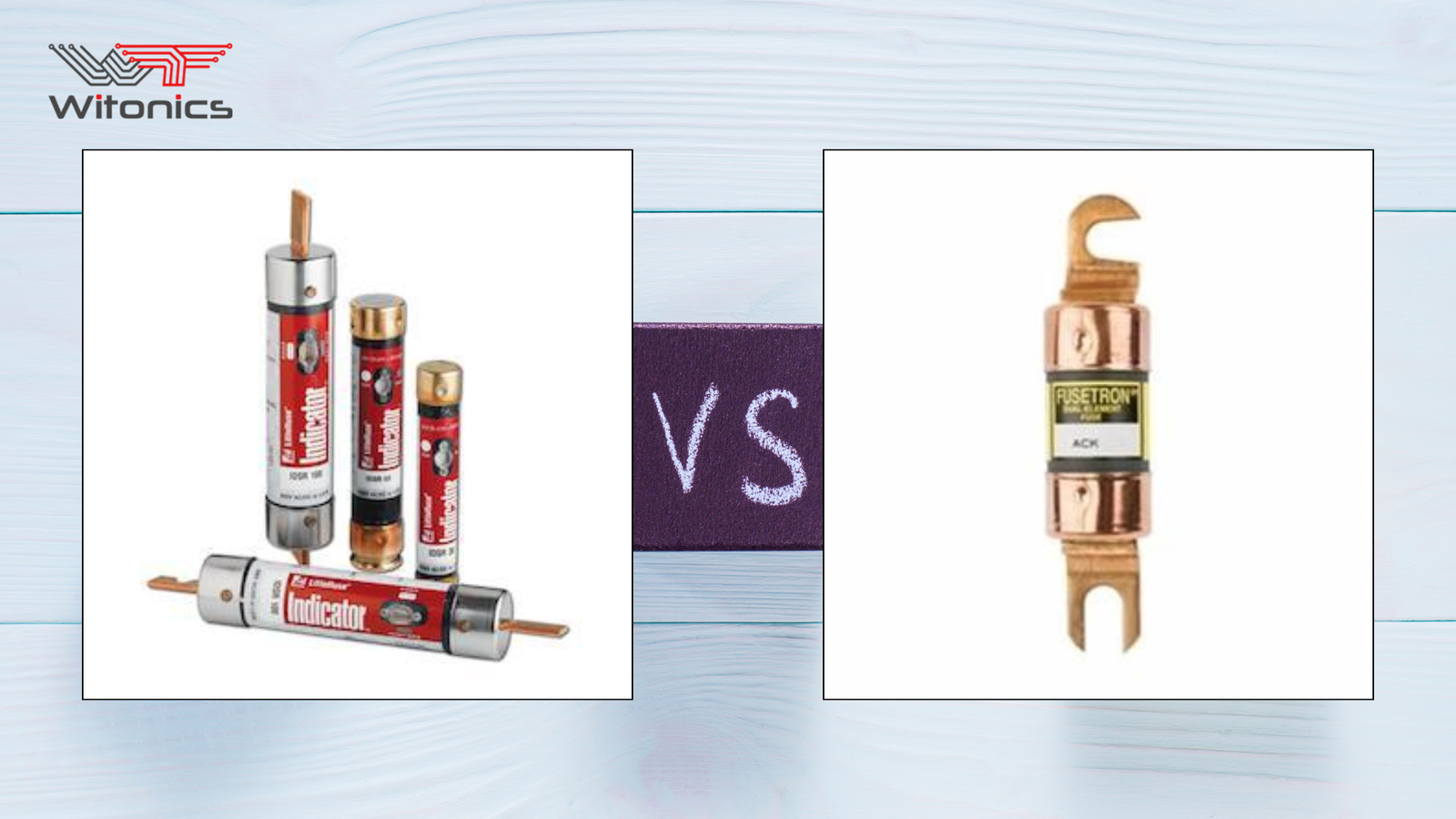

When a fuse needs replacement, the brand choice often becomes the next question. Littelfuse andBussmann are two names that appear repeatedly in datasheets, service manuals, and supplier catalogs.
Both brands manufacture a wide range of fuses, but they are not interchangeable in every situation.
Differences in build quality, certifications, response time, and application focus can affect how a circuit behaves during overload or fault conditions.
This blog will help you know how Littelfuse and Bussmann compare, what technical factors actually matter, and how to select the right option so that your fuse choice protects the circuit.
A fuse is not just a replaceable part. It is a safety component that protects wiring, devices, and connected systems.
Choosing the wrong brand or specification can affect how circuits handle surges, faults, and heat.
In systems involving power converters, fuse consistency becomes important because current spikes are common during startup.
Fuse brand selection matters most when:
→ Equipment runs continuously
→ Fault currents are high
→ Compliance or safety standards apply
→ Replacement access is limited
Littelfuse is known for a broad catalog covering consumer, automotive, and industrial protection components.
Their fuses are widely used in control panels, power supplies, and sensitive electronics.
→ Wide availability of ratings and formats
→ Strong focus on industrial and electronic applications
→ Consistent performance in low voltage circuits
→ Clear documentation for compliance-driven environments
Littelfuse products are often selected where precision and predictable response time matter more than visual inspection.
Bussmann (by Eaton) has a strong presence in industrial and automotive markets. Their fuses are widely used in distribution systems and heavy-duty equipment.
→ High interrupt ratings
→ Strong mechanical construction
→ Trusted performance under high fault current
→ Commonly specified in industrial standards
Many technicians rely on a bussmann fuse when durability and fault tolerance are the main concern.

Some circuits require instant protection, while others need a brief delay. Littelfuse and Bussmann both offer options likefast acting fuse designs and delayed-response models.
Choosing incorrectly can cause:
• Unnecessary shutdowns
• Delayed fault isolation
• Component stress
Certain installations require certified formats such as class c fuse types. Bussmann is commonly specified in such environments, especially where compliance is mandatory.
Both brands supplyglass cartridge fuses, but Bussmann often leans toward ceramic builds for industrial loads. Littelfuse provides more options for electronics-focused circuits.
Littelfuse is often preferred in electronics involving sensitive parts likeelectrolytic capacitors in regulated power sections.
Bussmann fuses are commonly used in automotive accessories, where vibration resistance and durability matter.
Both brands support cartridge fuses used in distribution boards, but ratings and tolerance vary by model.
|
Factor |
Littelfuse |
Bussmann |
|
Main use |
Electronics and control circuits |
Industrial and automotive systems |
|
Fault current handling |
Low to moderate |
Moderate to high |
|
Common construction |
Glass and ceramic |
Mostly ceramic |
|
Response behavior |
Precise, electronics-focused |
Durable, surge-tolerant |
|
Best fit |
Sensitive electronic protection |
Heavy-duty circuit protection |

1. Assuming all brands behave the same: Two fuses with identical ratings can respond differently during overload.
2. Ignoring circuit behavior: Startup surges often require delayed response designs.
3. Replacing without reviewing documentation: Equipment manuals often specify acceptable fuse brands and types.
4. Overlooking system role: Fuses protecting power converters behave differently than those in lighting or signal circuits.
Q: Is Littelfuse better than Bussmann?
A: Neither is universally better. The right choice depends on application, fault current, and compliance needs.
Q: Can Bussmann and Littelfuse fuses be swapped?
A: Only if ratings, response time, and construction match exactly.
Q: Why does brand matter for fuses?
A: Internal design affects how quickly a fuse reacts and how safely it interrupts current.
Q: Which brand is better for industrial use?
A: Bussmann is more commonly specified for industrial circuit protection, but Littelfuse is also widely used.
Littelfuse and Bussmann both offer reliable protection, but they serve slightly different priorities. Littelfuse fits well in electronics-focused systems where precision and predictable behavior matter.
Bussmann is often chosen for industrial and automotive setups where durability and fault handling are critical.
The best choice comes from understanding circuit requirements rather than relying on brand familiarity. Factors like response time, construction type, and compliance standards should guide the decision.
Witronics provides structured listings for both brands, helping users compare specifications without confusion and select components that match real circuit needs rather than assumptions.
A careful selection reduces failures, improves safety, and keeps systems running as intended.