Your Cart is Empty


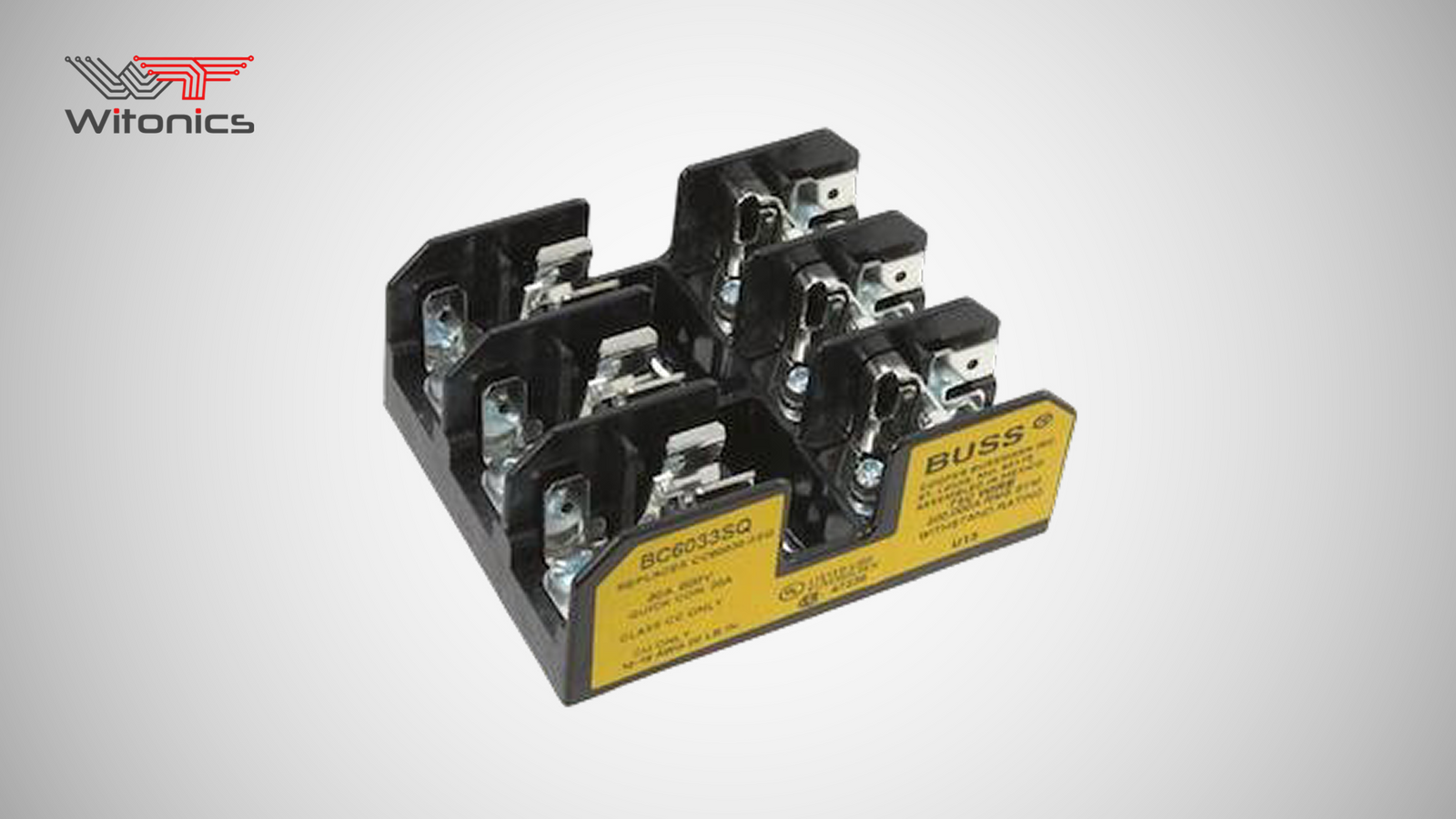

If you have ever opened an industrial control panel and found a small fuse with a distinctive end tip that would not fit a standard midget holder, you were looking at a Class CC fuse. That unusual tip is not a manufacturing variation - it is a deliberate safety feature that physically prevents the wrong fuse from being installed.
Class CC fuses are widely specified for motor branch circuits, control panels, and IEC contactor applications. But most buyers select them by part number alone without understanding what the"CC" fuse class designation actually means or why using the wrong fuse in a Class CC holder creates a serious safety risk.
This guide explains what a Class CC fuse is, how the rejection feature works, the difference between time-delay and fast-acting variants, how the main series compares, and when to specify Class CC over other fuse types.
A Class CC fuse is a current-limiting, rejection-style branch circuit fuse defined underUL Standard 248-4. The "CC" is a UL fuse class designation that defines both the physical dimensions and the minimum performance requirements a fuse must meet to carry that label.
Class CC fuses cover the following standard ratings:
Current range: 1/10A to 30A
Voltage: 600V AC / 300V DC
Interrupting rating: 200kA rms symmetrical
Physical size: 13/32" x 1-1/2"
Two variants exist under the Class CC designation:time-delay (most common in motor and control applications) andfast-acting (for resistive and electronic loads). Both share the same rejection-style body and 200kA interrupting rating.
Class CC fuses are labeled "Current Limiting" on the fuse body. Time-delay variants additionally carry the "Time Delay" marking, confirming they meet the UL 248-4 time-delay test requirement.
The defining physical feature of a Class CC fuse is therejection tip on the end cap. This tip prevents a standard midget fuse from being inserted into a Class CC fuse holder.
Here is why that matters. A midget fuse and a Class CC fuse share the same 13/32" x 1-1/2" body dimensions. Without a rejection feature, a technician replacing a blown Class CC fuse could accidentally install a standard midget fuse in its place. The risk: a midget fuse carries only a 10kA interrupting rating. A Class CC holder is rated for 200kA. That is a 20-to-1 difference in fault current capacity.
If a high fault current event occurred with a midget fuse installed in a Class CC holder, the fuse could fail destructively - arcing internally, overheating the holder, or causing a fire - because it was never designed to interrupt that level of fault energy.
The rejection tip makes that substitutionphysically impossible. A Class CC holder will only accept a fuse with the matching rejection profile. This is not a labeling convention - it is a code-compliance and safety feature built directly into the fuse and holder design

Time-delay Class CC fuses must hold 200% of rated current for a minimum of 12 seconds before opening. This allows them to ride through the startup inrush of motors, control transformers, and IEC contactors without tripping on the initial surge. They are the standard choice for any circuit that has an inductive load at startup.
For a full explanation of how time-delay fuses work and how they compare to fast-acting fuses, see ourtime-delay fuse guide.
Fast-acting Class CC fuses open immediately on any overcurrent above the rated value, there is no intentional delay. They are the right choice for resistive loads, lighting circuits, and sensitive electronics where no inrush current needs to be tolerated and the fastest possible fault clearing is required.
Both time-delay and fast-acting variants share the same rejection body, 600V AC / 300V DC rating, and 200kA interrupting capacity. The operating characteristic is the only difference.
Several series are available under the Class CC designation from Bussmann and Littelfuse. Here is how they compare:
|
Series |
Brand |
Type |
Voltage |
Best For |
|---|---|---|---|---|
|
FNQ-R |
Bussmann |
Time-Delay |
600V AC / 300V DC |
Motor branch circuits, control panels, transformers |
|
LP-CC |
Bussmann |
Time-Delay |
600V AC / 300V DC |
Space-saving branch circuit protection |
|
KTK-R |
Bussmann |
Fast-Acting |
600V AC / 300V DC |
Resistive loads, electronics, lighting circuits |
|
CCMR |
Littelfuse |
Time-Delay |
600V AC / 300V DC |
Motor circuits up to 40HP, IEC contactor protection |
TheBussmann FNQ-R series is the most widely used Class CC time-delay fuse in industrial control panel and motor circuit applications. The FNQ (without the R suffix) is a supplemental fuse - it does not have the rejection feature and is not rated for branch circuit use. Always confirm you are specifying the FNQ-R when branch circuit protection is required.
The LP-CC is Bussmann's Low-Peak Class CC series - dimensionally interchangeable with FNQ-R in the same Class CC holders but with a slightly different overload characteristic. The CCMR from Littelfuse is a direct alternative for FNQ-R and LP-CC in Class CC holders and is rated specifically for motor circuits up to 40HP.
Specify a Class CC fuse in these situations:
Your motor branch circuit is 30A or under and requires time-delay protection with maximum current limiting in a compact form factor
Your control panel uses IEC contactors - Class CC is the most current-limiting fuse class in its rating range, making it the preferred choice for IEC device protection per manufacturer requirements
You are upgrading an existing installation from standard midget fuses to rejection-style holders that prevent substitution of lower-rated fuses
The equipment nameplate or panel schedule specifies Class CC by fuse class designation
You need a 600V fuse in the 1/10A to 30A range with a 200kA interrupting rating
For circuits above 30A, Class J, RK, or L fuses handle the higher current range. For a full breakdown of current limiting fuse classes and how they compare, see ourcurrent limiting fuse guide.

Witonics stocks the full Class CC lineup from Bussmann, including:
FNQ-R series - time-delay, 600V AC, 1/10A to 30A, branch circuit rated
LP-CC series - time-delay, 600V AC, 1/2A to 30A, Low-Peak branch circuit
KTK-R series - fast-acting, 600V AC, 1/10A to 30A, rejection type
Browse ourBussmann fuse collection or ourfull fuse collection to find the exact Class CC fuse series and amp rating your application needs - all in stock and ready to ship.
Frequently Asked Questions
Q: What does Class CC mean on a fuse?
A: Class CC is a UL designation defined under UL Standard 248-4. It specifies the fuse dimensions (13/32" x 1-1/2"), voltage rating (600V AC), current range (1/10A to 30A), minimum interrupting rating (200kA), and the required rejection tip that prevents lower-rated fuses from being installed.
Q: What is the rejection feature on a Class CC fuse?
A: It is a physical tip on the fuse end cap that prevents a standard midget fuse from fitting into a Class CC holder. This matters because midget fuses share the same body size but are only rated at 10kA interrupting - 20 times lower than the 200kA a Class CC holder is designed for.
Q: What is the difference between FNQ and FNQ-R?
A: The FNQ is a supplemental fuse rated at 500V AC with no rejection feature - it is not approved for branch circuit use. The FNQ-R is a Class CC branch circuit fuse rated at 600V AC with the rejection tip and 200kA interrupting rating. Never substitute FNQ for FNQ-R on a branch circuit.
Q: Can a Class CC fuse replace a midget fuse?
A: Yes. A Class CC fuse fits in any standard midget holder and also in rejection-style Class CC holders. Upgrading to Class CC fuses and rejection holders increases your interrupting capacity from 10kA to 200kA - a significant safety improvement with no wiring changes required.
Q: What is the difference between time-delay and fast-acting Class CC?
A: Time-delay Class CC fuses (FNQ-R, LP-CC) hold 200% of rated current for at least 12 seconds, allowing them to ride through motor and transformer startup inrush without tripping. Fast-acting Class CC fuses (KTK-R) open immediately on any overcurrent - the right choice for resistive loads, lighting, and electronics with no startup surge.
A Class CC fuse is more than a compact 600V fuse. It is a UL-defined performance standard with built-in rejection, 200kA interrupting capacity, and time-delay or fast-acting characteristics engineered for specific load types. The rejection feature alone makes it the right upgrade path for any installation that currently uses standard midget fuses in the same size range.
Witonics stocks FNQ-R, LP-CC, and KTK-R in the full amp range. If your application calls for a Class CC fuse, the right series is in stock.