Your Cart is Empty


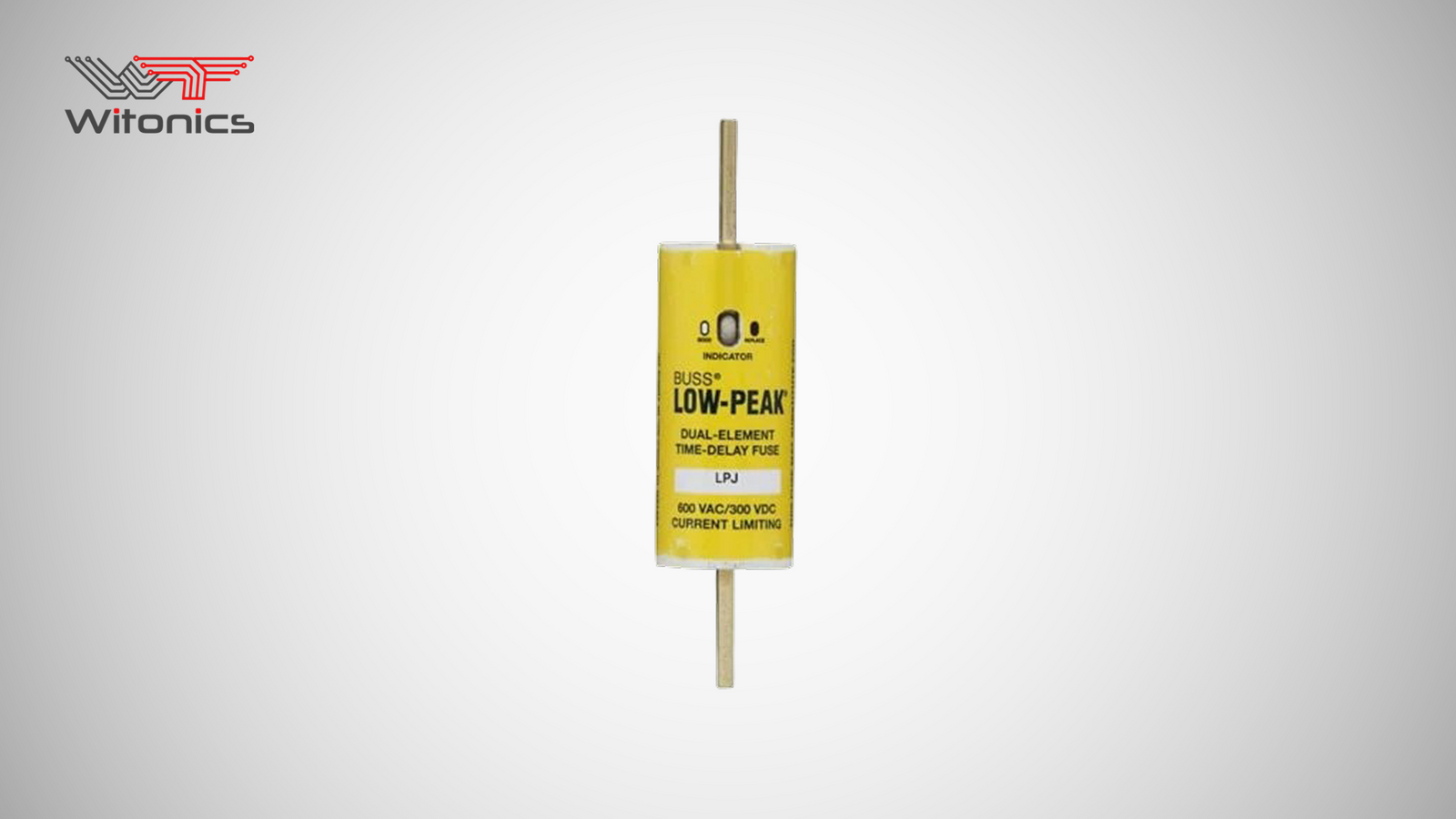

A standard fuse protects your circuit by breaking it. A current limiting fuse does something more powerful - it controls how much destructive energy ever enters the circuit in the first place.
Most electricians and panel builders know overcurrent protection is non-negotiable. But there are situations where a standard fuse cannot respond fast enough to prevent equipment damage - specifically when available fault current is high, when sensitive electronics are involved, or when downstream equipment cannot survive the full peak of a fault.
This guide explains what a current limiting fuse is, how it works differently from a standard fuse, the three types available, which fuse class fits your application, and when you genuinely need one.
A current limiting fuse is a protective device that interrupts fault current so quickly it prevents the current from ever reaching its full destructive peak. Unlike a standard fuse that opens after fault current has peaked and done its damage, a current limiting fuse opens during thefirst quarter-cycle of the fault - before the peak is reached.
The construction is what makes this possible. Current limiting fuses use a pure silver fuse element inside a cylindrical housing filled withsilica sand. When a fault occurs, the element melts almost instantly and creates an arc. The silica sand absorbs the arc energy and melts around the vaporized silver, forming a glass-like insulating material called fulgurite that chokes off the current - permanently quenching the arc.
The result is a dramatic reduction inlet-through energy - the I²t value that determines how much thermal and mechanical stress reaches your busbars, wiring insulation, contacts, and downstream components.
You will see current limiting fuses labeled with theirinterrupting rating in kiloamperes (kA). This tells you the maximum fault current the fuse can safely interrupt. Always match or exceed the available fault current at your panel.
Standard overcurrent protection opens after fault current has already peaked. A fast acting fuse, for example, still allows that peak to pass through the circuit - it simply opens before sustained overload damage compounds.
A current limiting fuse works on a different principle. The fault current begins to rise rapidly - in an unprotected circuit it reaches its destructive peak within a few milliseconds. The current limiting fuse element melts and the arc is quenched within the first quarter-cycle, cutting off the peak entirely.
Think of it this way: a standard fuse lets the wave crash and then stops it. A current limiting fuse stops the wave before it fully builds.
This matters for two specific reasons. First, the mechanical force on busbars and conductors during a fault is proportional to the square of the peak current - limiting the peak dramatically reduces physical stress on the panel. Second, semiconductor devices like VFDs, SCRs, and rectifiers cannot survive even a brief exposure to a full fault peak. They need the fault current limited before it peaks - not after.

A backup current limiting fuse only operates on high fault currents. It does not protect against overloads or low-level faults on its own - it must be paired with another protective device such as a contactor or overload relay to handle the lower current range.
This is the most common type in motor branch circuit and industrial control panel applications. TheBussmann FNQ-R series (Class CC, 600V AC) is a widely used backup current limiting fuse for motor circuit protection and control transformer applications.
A general purpose current limiting fuse handles the full protection range - from overloads through maximum short circuit current - without requiring a secondary protective device. It is the most versatile type and the standard choice for branch circuits, panelboards, and industrial feeders.
TheBussmann LPJ fuse series (Class J, 600V AC) is a general purpose current limiting fuse rated for up to 300,000A interrupting capacity. Class T fuses also fall in this category and are a popular choice in high-density panels where space is limited.
A full range current limiting fuse - also called a semiconductor fuse or high speed fuse - interrupts any current level that causes the element to melt. It offers the widest protection spectrum and the fastest possible response time.
Semiconductor fuses are specifically engineered to protect sensitive devices including variable frequency drives (VFDs), silicon controlled rectifiers (SCRs), and rectifier diodes. A standard fuse - even a fast acting fuse - is not fast enough for these applications. Semiconductor fuses respond in microseconds rather than milliseconds, making them one of the most specialized current limiting devices available. The Bussmann FWP and KTU series are typical options for drive and rectifier protection.
The fuse class determines voltage rating, physical size, and application range. Use this table as a quick reference:
|
Fuse Class |
Type |
Voltage |
Best For |
|---|---|---|---|
|
Class CC |
Backup |
600V AC |
Motor branch circuits, control panels, transformers |
|
Class J |
General Purpose |
600V AC |
Panelboards, industrial feeders, branch circuits |
|
Class T |
General Purpose |
600V AC |
High-density panels, compact installations |
|
Class L |
General Purpose |
600V AC |
High-amperage feeders (601A to 6000A) |
|
Semiconductor |
Full Range |
Up to 700V |
VFDs, drives, SCRs, rectifier circuits |
Use a current limiting fuse over a standard fuse in these situations:
The available fault current (AFC) at your panel is high and downstream equipment has a lower interrupt rating
You are protecting semiconductor devices - VFDs, drives, or SCRs - that cannot survive a full fault current peak
The equipment nameplate or NEC specification requires a current limiting fuse by class
You need to reduce let-through energy (I²t) to protect busbars, contacts, or wiring insulation from mechanical and thermal stress
You are specifying Class T fuses in a high-density panel where compact form factor matters alongside current limiting protection
Motor starter circuits where a backup current limiting fuse is required alongside a contactor and overload relay
If your circuit uses a standard fuse and equipment damage on faults is the problem - not nuisance trips - a current limiting fuse is almost certainly the answer.
A fast acting fuses open quickly on overcurrent but still allow the fault current peak to pass through before they open. A current limiting fuse limits the peak itself - cutting off fault energy before it reaches its destructive maximum. The key difference is not speed alone, it is when in the fault cycle the fuse operates. For a full breakdown of fuse timing and how slow-blow, fast-acting, and time-delay fuses compare, see ourtime-delay fuse guide.

Witonics stocks a full range of current limiting fuses from Bussmann and Littelfuse, including:
Bussmann FNQ-R Series - Class CC backup current limiting fuse, 600V AC, ideal for motor circuits and control panels
Bussmann LPJ Series - Class J general purpose current limiting fuse, 600V AC, up to 300kA interrupting rating
Bussmann JJN Series - Class J current limiting fuse, 600V AC, dual element general purpose protection
Bussmann FWP/KTU Series - Semiconductor fuses for VFD, drive, and rectifier protection
Browse our completefuse collection at Witonics to find the exact current limiting fuse for your application - all in stock and ready to ship.
Q: What is the difference between a current limiting fuse and a regular fuse?
A: A regular fuse opens after the fault current peaks. A current limiting fuse opens in the first quarter-cycle - before the peak - limiting the energy that reaches your equipment.
Q: Can I replace a standard fuse with a current limiting fuse?
A: Yes, as long as the voltage rating, fuse class, and amp rating match.
Q: What does the interrupting rating (kA) mean?
A: It is the maximum fault current the fuse can safely interrupt. Always choose a fuse rated at or above the available fault current at your panel.
Q: Do I need a current limiting fuse for a motor circuit?
A: If your panel has high available fault current, yes. Class CC fuses like the FNQ-R are the standard choice for motor branch circuits up to 30A.
Q: What is the difference between Class J and Class CC?
A: Class CC covers up to 30A. Class J covers up to 600A. Both are current limiting at 600V AC.
A current limiting fuse is not simply a faster fuse. It is a fundamentally different type of current limiting device - one that controls fault energy rather than just interrupting it after the damage is done. Matching the right type (backup, general purpose, or full range) and the right fuse class to your application is the difference between a protected panel and damaged equipment.
Witonics stocks the full Bussmann current limiting fuse lineup - FNQ-R, LPJ, JJN, and semiconductor series - with competitive pricing and fast shipping. Browse ourBussmann fuse collection or use the class reference table above to find exactly what your circuit needs.